GISTT RACE · Research Alliance for CurE

Projects

Every project answers one of the central questions on the road to cure. Questions to a cure shows where each one fits.

Project

GISTT-RACE platform trial

Project 1 · the goal every other project serves

One academic, international trial platform that tests the most promising treatments for cure, chosen by tumor biology and patient needs alone. Three populations, one master protocol, a growing control backbone.

Lead: Working groups of the alliance

The trial →
Project

reGISTTry

Comprehensive registry linked to curated samples, and an open data portal for the community.

Lead: J. Falkenhorst

Project page →
Project

SURGISTT 2

International registry pilot: matched comparison of patients with and without surgery after imatinib response, with central imaging.

Leads: F. Dossa, M. Kaths

Project page →
Activated sites to be addedActivation pending to be added
Scientific board · 7
  • Fahima Dossa, MD, PhDCedars-Sinai Medical Center · Los Angeles, USA
  • Prof. Alessandro Gronchi, MDFondazione IRCCS Istituto Nazionale dei Tumori · Milan, Italy
  • Prof. Peter Hohenberger, MDUniversity Medical Center Mannheim, Heidelberg University · Mannheim, Germany
  • Moritz Kaths, MD, MScUniversity Hospital Essen · Essen, Germany
  • Prof. Chandrajit P. Raut, MD, MScBrigham and Women’s Hospital, Dana-Farber Cancer Institute, Harvard Medical School · Boston, USA
  • Prof. Piotr Rutkowski, MD, PhDMaria Sklodowska-Curie National Research Institute of Oncology · Warsaw, Poland
  • Prof. Jason K. Sicklick, MDUC San Diego · San Diego, USA
Project

FORECAST

Resistance patterns after new second-line drugs and their effect on subsequent treatment lines.

Leads: J. Falkenhorst, A. Napolitano

Project page →
Activated sites to be addedActivation pending to be added
Scientific board

To be listed.

Project

Road to the Cure

Four labs working together on GIST persistence: the tumor cells that survive otherwise effective therapy and later cause resistance.

Leads: S. Bauer, P. Chi, R. DeMatteo, J. Fletcher · Funded by Road to the Cure Foundation

Project page →
Read the synopsis

The problem. First-line KIT/PDGFRA-inhibitors, imatinib and avapritinib, shrink most advanced GISTs, yet some tumor cells always survive (persist) and eventually cause resistance. Strikingly, the best response of most GIST metastases with acquired imatinib resistance is persistence rather than regression. Therefore, cures for both treatment-naïve and treatment-resistant GISTs require strategies that remove these persister cells.

Hypothesis. KIT and PDGFRA oncogenic mutations induce GIST proliferation and survival in part through the PI3K/AKT and MEK/MAPK signaling pathways. Preliminary studies in clinical specimens show that GIST cells persisting during effective KIT/PDGFRA-inhibitor therapies depend on combinations of:

  1. persistent KIT activation
  2. activation of other tyrosine kinases which (like KIT and PDGFRA) activate the PI3K/AKT and MEK/MAPK signaling pathways and
  3. reactivation of MEK/MAPK by KIT/PDGFRA-independent feedback loops

We hypothesize that insufficient blockade of the PI3K/AKT and MEK/MAPK pathways is a major roadblock to cures for metastatic GIST.

Aims. (1) Find the mechanisms of persistence during effective therapy. (2) Build models of persistence and test treatments that block it. (3) Design clinical trials aimed at longer survival and cure.

The four labs. Each brings its own biobank, models and methods, and all four share samples, data and reagents.

Bauer lab

West German Cancer Center, University Hospital Essen · Essen, Germany

Large biobank and long clinical follow-up of patients treated over two decades, plus isogenic GIST cell lines covering many KIT and PDGFRA variants. Studies whether stronger KIT inhibition deepens cell kill, and how mutations downstream of KIT and their zygosity shape persistence. Leads the shared sample inventory, the joint omics database and a registry of response at surgery.

Chi lab

Memorial Sloan Kettering Cancer Center · New York, USA

Tumor-intrinsic and microenvironment mechanisms of adaptive resistance. Builds on the discovery of ETV1 and FOXF1 as lineage survival factors: screens for druggable regulators of FOXF1, single-cell and spatial profiling of responders and non-responders, and neoadjuvant combination trials with imatinib.

DeMatteo lab

Perelman School of Medicine, University of Pennsylvania · Philadelphia, USA

Fresh tissue from surgery in untreated, responding and resistant GIST, with bulk and single-cell RNA sequencing. Develops immunotherapy to combine with kinase inhibitors, including preoperative trials, uses engineered mouse models of GIST, and explores steroid hormone receptors as non-kinase targets.

Fletcher lab

Brigham and Women’s Hospital and Dana-Farber Cancer Institute, Harvard Medical School · Boston, USA

A repository of persistent metastases removed after long-term or neoadjuvant kinase-inhibitor therapy, compared with untreated and progressing tumors. Asks whether persistence mechanisms are the same across all lesions in a patient, and uses genome-wide functional screens, transcriptomics and phospho-proteomics to find new targets.

Project

IRRADICATE-GISTT

IRRADIation to eradICATE GIST · radiotherapy for metastatic GIST, lesion by lesion

A retrospective, lesion-by-lesion study of radiotherapy in metastatic GIST: how often, and at which dose, an irradiated lesion stays under control, as the basis for a registry of lesions irradiated with curative intent.

Leads: A. Guadagnolo, A. Miah, M. Spałek

Read the concept

Why. The fewer residual tumor cells remain in the body, the lower the likelihood of progression. To push the limits of local therapy, we need to know what radiotherapy can add to surgery and interventional radiology. Most metastatic GIST lesions that were irradiated so far probably received palliative doses, and the published series are small. Whether GIST lesions can be controlled for years by radiotherapy, and at which dose, is not known.

Questions.

  • Can radiotherapy achieve long-term local control of metastatic GIST lesions, and at what dose?
  • How effective is it by anatomic location (liver, bone, intra-abdominal), and what are the limits at each?
  • What is the experience with concomitant kinase inhibitor treatment?
  • Which lesions are better left to interventional radiology, including for cost-effectiveness?
  • Is there radiotherapy-refractory GIST, and is there a molecular reason? Some GIST acquire TP53 mutations as they progress, and there is some evidence that this could affect response: an experimental question if the data point that way.

Design. Retrospective and multicenter. The unit of analysis is the irradiated lesion, not the patient. Every metastatic GIST lesion treated with radiotherapy, at any dose and with any intent, in patients followed for at least one year after radiotherapy or until death.

Next step. A prospective registry of lesions irradiated with lesion-curative intent, as a module of reGISTTry: the same minimal data set, the DICOM RT plan, imaging at fixed intervals, and, where available, ctDNA before and after treatment.

For GISTT-RACE. The first-line platform protocol is meant to define standards and limits of treatment, as pediatric protocols for Ewing sarcoma or rhabdomyosarcoma do. The study gives radiotherapy its place in that protocol.

Aligned projects

Independent projects with their own funding and governance that share data, methods or goals with GISTT-RACE.

Aligned project

PATHFINDERS

Resistance profiling in routine care: lesion tracking on imaging, ctDNA and long-read KIT sequencing, brought together for the tumor board.

Lead: West German Cancer Center Essen · Funded by Deutsche Krebshilfe

Read the synopsis
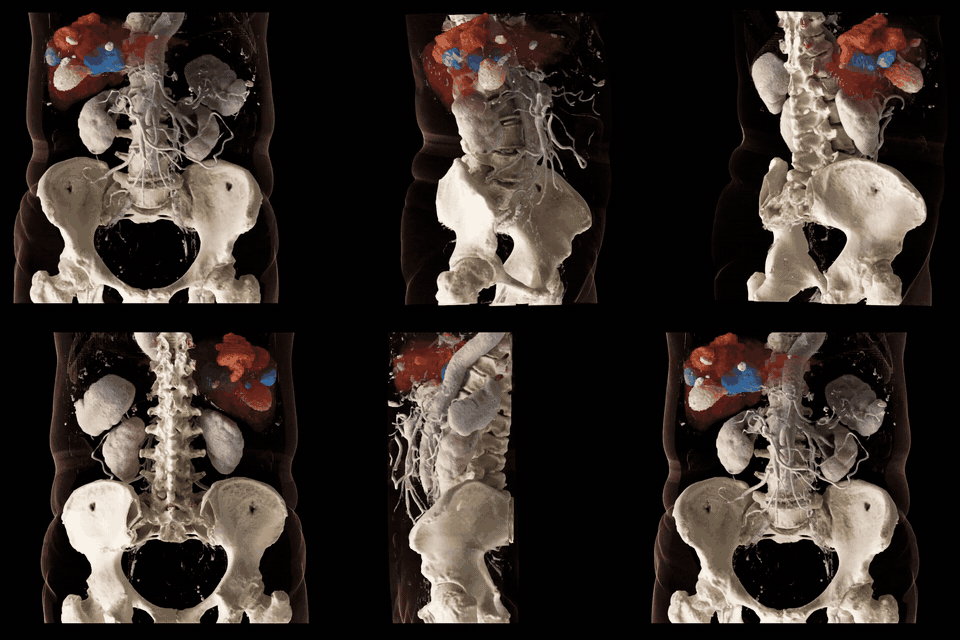
Rotating 3D rendering of an abdominal CT scan with individual liver metastases highlighted in color
3D rendering of a CT scan: individual liver metastases are highlighted in color, so that each lesion can be followed over time.

The problem. After imatinib, GIST becomes resistant through secondary KIT mutations. Different metastases in the same patient often carry different mutations, and some carry two resistance mutations on the same allele that make the tumor resistant to almost every available inhibitor. In routine care, progression is still judged on imaging alone, without knowing which lesions are driven by which mutation.

The aim. To determine the resistance profile of each patient in routine care, and to use it to choose the next treatment.

How. PATHFINDERS combines five tools:

  • AI-augmented tracking of every lesion on serial CT scans
  • PET during treatment to find lesions that no longer respond
  • Circulating tumor DNA (ctDNA) from blood to detect resistance mutations and their mix
  • Long-read sequencing of tumor tissue, which shows whether two mutations sit on the same allele (ctDNA fragments are too short for this)
  • One interface that brings the results together for the tumor board

What it can change. An informed choice between rechallenge with an earlier drug, local treatment of the few resistant lesions, off-label therapy through the molecular tumor board, or an experimental drug or combination.

For GISTT-RACE. The resistance profiles define the cohorts of the platform trial.

Aligned study

SARC044

Phase II trial of bezuclastinib plus sunitinib in advanced GIST after sunitinib, with serial ctDNA to follow how resistance evolves.

Leads: Candace Haddox, Dana-Farber Cancer Institute (study chair) · Coordinated by SARC

NCT06208748 on ClinicalTrials.gov →
Read the synopsis

Who. Adults with inoperable or metastatic GIST with a primary KIT exon 9 or 11 mutation, whose disease progressed on imatinib and then on sunitinib.

Why. Resistance usually comes from secondary KIT mutations in two different parts of the kinase: the ATP-binding pocket and the activation loop. Sunitinib covers the first, bezuclastinib the second. Together they are designed to block the main resistance mutations, while bezuclastinib adds little to the VEGFR-related side effects of sunitinib.

How. A single-arm, open-label phase II trial. After a washout, patients take bezuclastinib alone for two weeks, then bezuclastinib and sunitinib together in continuous 28-day cycles.

Endpoints. The primary endpoint is median progression-free survival, compared with historical controls. Repeated blood samples (ctDNA) follow how the tumor's mutations change under the combination.

Context. The same combination was tested in second line against sunitinib alone in the randomized phase III PEAK trial, which reported a significant improvement in progression-free survival in November 2025.

Aligned project

HUSARC

HUSARC is an initiative to expand available models in the sarcoma world, including GIST.

Lead: S. Grunewald · Funded by Sarkomtour

Project page →

Project proposals

Ideas that are not running yet. Each needs a lead, partners and funding. If you would like to take one on, or have data that would help, please get in touch.

Proposal

Ultra-long responders

Can we predict an ultra-long response?

Some patients with metastatic GIST respond to imatinib for well over a decade. Can we recognize them early: a sorta-cure population for whom long-term imatinib alone is enough?

Lead: to be named

Read the concept

The observation. In the French BFR14 trial, 13% of patients with advanced GIST were alive 20 years after starting imatinib, and some never progressed on it (Is a cure realistic?). For them, long-term imatinib may already be enough: a sorta-cure.

The aim. To find out whether ultra-long response can be predicted at the start of treatment or after the first months, so that these patients can be spared intensification, and the others offered more from the beginning: surgery of residual disease, combinations or a trial.

How (proposed).

  • Define ultra-long response (for example, no progression on first-line imatinib for ten years or more) and compare these patients with patients who progressed early
  • Candidate predictors: the exact KIT or PDGFRA mutation and its zygosity, additional mutations, tumor burden and sites, depth and speed of response, surgery of residual disease, ctDNA at baseline and on treatment
  • Data from existing trial cohorts and registries, prospectively from reGISTTry, with tissue and omics through GOMAP

For GISTT-RACE. A first-line platform trial needs to know whom it can leave on imatinib alone. Ultra-long responders are the reference group for any intensified first-line strategy.

Proposal

CHART-GISTT

CHaracterizing Antigen and Radioligand Targets in GIST

Which targets could a radioligand or antibody-drug conjugate use against the GIST cells that survive TKI treatment? A mapping study of FAP, GRPR, B7-H3 and MT1-MMP in tissue and on PET, before and during treatment, as the basis for a radioligand arm in the platform trial.

Leads: R. Hamacher, W. Fendler, P. F.-Y. Cheung

Read the concept

Rationale. Surgery is the only cure for GIST. Tyrosine kinase inhibitors (TKIs) often achieve long-term tumor shrinkage and disease control in KIT- and PDGFRA-mutated GIST, but do not eradicate it. The surviving cells are the source of relapse and resistance. A radioligand kills by radiation-induced DNA damage, independent of KIT/PDGFRA signaling, genotype and resistance mutations. It needs only a target on, or next to, the surviving cell. KIT inhibition also has an impact on DNA-damage repair, which could be potentiated by a radionuclide or an antibody-drug conjugate.

Therapeutic concept. The TKI reduces tumor volume; a radioligand then irradiates the residual cells. Two settings: additive to TKI in metastatic GIST at best response, where residual lesions are still PET-visible; and adjuvant around surgery (high-risk, rupture, metastasectomy), where residual disease is microscopic. The models are radioiodine after thyroidectomy, radioimmunotherapy consolidation in lymphoma and MIBG consolidation in neuroblastoma. Radionuclide therapy works best at low tumor burden.

The question. The design of such a trial depends on a question that is currently unanswered: are the candidate targets present in a sufficient proportion of patients and lesions, and how does TKI treatment alter their expression? Because imatinib-treated GIST undergoes stromal and myxoid remodelling, stromal targets in particular may be upregulated on treatment. No study has yet examined this.

Candidate targets. FAP (fibroblasts, in sarcomas also tumor cells), GRPR (tumor cell membrane), B7-H3 (tumor cell membrane and vasculature) and MT1-MMP (tumor and stroma).

Objectives.

  • Tissue mapping. Expression of FAP, B7-H3, GRPR and MT1-MMP in relation to genotype, TKI treatment and treatment duration, by immunohistochemistry and RNA analysis of existing HUSARC and reGISTTry samples, enriched for paired pre- and post-TKI specimens from SURGISTT 2
  • PET imaging. Target expression in vivo at baseline, under TKI treatment and by genotype, with available tracers, assessing uptake intensity and heterogeneity between lesions
  • Tumor microenvironment. The GIST microenvironment and its remodeling under TKI treatment, by multiplex immunofluorescence, related to target expression

Decision rule. A target supports a radioligand arm in the platform trial only if a clear majority of patients have target-positive residual disease on TKI, contrast against liver, bowel and kidney is workable, and expression holds or rises under TKI. A tumor-cell target that is membranous and retained additionally justifies an adjuvant concept; a purely stromal target supports the metastatic setting only. A negative result is published.

Open for input. Sites with an interest in radioligand or antibody-drug conjugate targets in GIST are invited to comment on the concept and to take part, for example with tissue, PET imaging data or tracers.
Proposal

Annoyance scale

Working title

A new patient-reported outcome that measures how much a drug and its schedule get in the way of daily life, and whether that predicts how well patients can stay on treatment.

Lead: to be named

Read the concept

The problem. Drugs and trial schedules are judged on efficacy and on side effects graded by physicians. Those grades measure severity, not how much a treatment gets in the way. Mild diarrhea every morning, a fasting window around each dose, a tablet count that changes with every dose reduction, weekly lab visits, a long drive to the trial center: none of this counts as a serious adverse event, yet it is what patients talk about, and it is what makes people skip doses or stop. In GIST, where treatment runs for years and works only if it is taken continuously, this matters.

The aim. A short questionnaire, developed with patients, that captures the everyday annoyance of a drug and its schedule, and shows whether that annoyance predicts adherence, dose interruptions and stopping early.

How (proposed).

  • Ask patients and patient organizations what bothers them about treatment, in interviews and focus groups
  • Draft items from what they say: how the drug is taken (food, timing, number of tablets), lasting mild side effects, appointments and travel, effects other people notice
  • Test the items for understanding in several languages, then validate them against established questionnaires (EORTC QLQ-C30, PRO-CTCAE) and against measured adherence
  • Keep it short enough to complete in a few minutes at each visit, on paper or on a phone

For GISTT-RACE. Built into the platform trial from the start, so that new drugs and schedules are compared not only on how well they work and how toxic they are, but also on how livable they are. Once validated, it can be added to reGISTTry.

To join a project, please contact info@gistt-race.org.